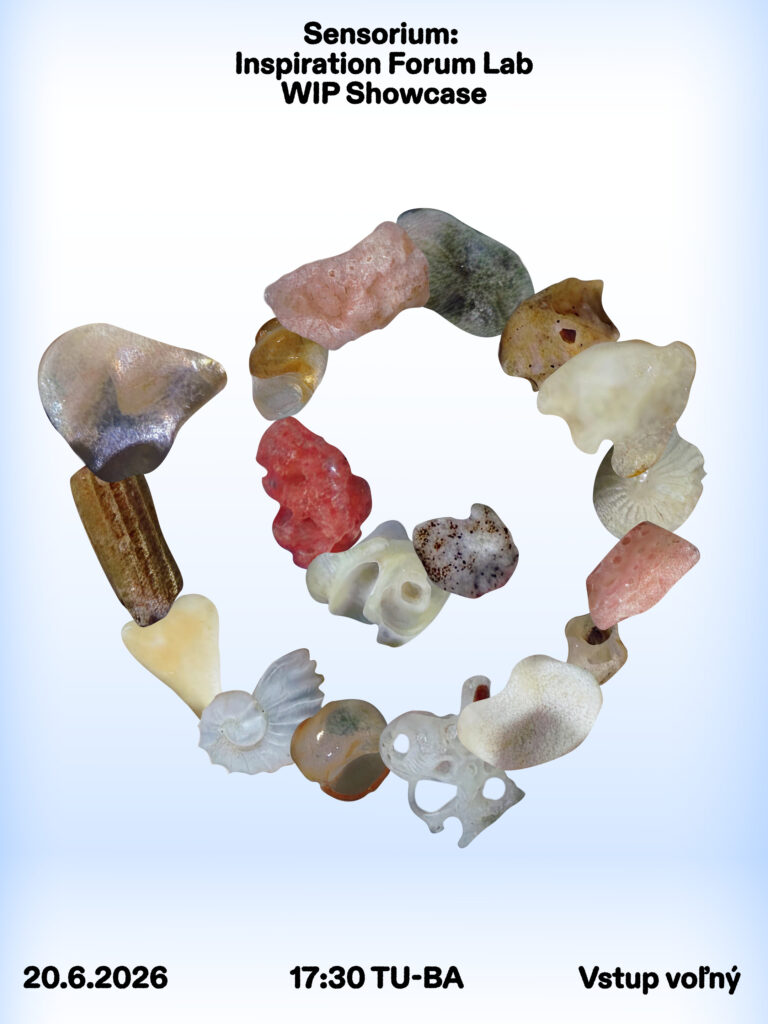
20. 6. 2026 at 17.30 | presentation of IF Lab artworks will take place at TU-BA, Štúrova 4, 811 02 Bratislava
The Sensorium Festival will feature presentations of three interdisciplinary works created within the Inspiration Forum Lab.
Inspiration Forum Lab is an international interdisciplinary research program by the Ji.hlava Festival (Czech Republic), Kersnikova Institute (Slovenia), and Sensorium (Slovakia), connecting artists and scientists to create research-based multimedia projects. Its goal is to find new ways to bridge the languages of science and art, sharing knowledge with audiences across worlds that rarely intersect.
In the 2025/2026 season, the program focuses on exploring trajectories as both structural and metaphorical movements across time and space. It interprets trajectories not only as physical paths, tracks, or movement patterns of bodies, objects, and elements within natural and social systems but also as conceptual and data footprints that reveal patterns of movement, change, and disruption within broader environmental, social, and political contexts.
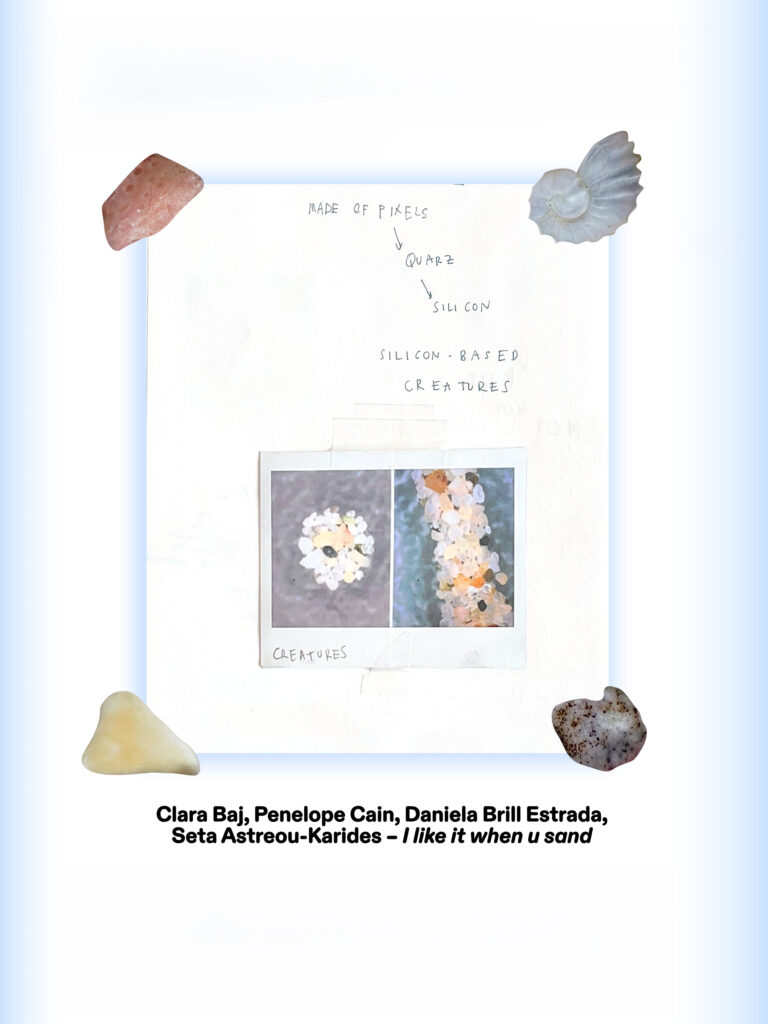
I like it when u sand – Clara Baj, Penelope Cain, Daniela Brill Estrada, Seta Astreou-Karides
I like it when u sand is a multi-dimensional, multi-spacial, multi-layered artistic project that is trying to capture sand while embracing the impossibility of doing so. It explores sand as a verb and a process rather than a static material, therefore tuning into its mechanisms and internal grammars. Bringing together language, narratives, and objects made of sand, but intentionally excluding sand itself as an exhibited object, this project studies the socio-geo-political, geological, chemical, and poetic trajectories of this essential material for life on earth.
The piece will be created in two different ways and brought together as an installation/performance. The first way is based on language. Four artists working from four different countries attempt to gather and come up with definitions of the verb “sand”. This list of definitions will show, in a poetic but politically engaged form, the conceptual layers our research has explored, and it will be printed and shown at the final exhibition. The second is an installation/performance composed of objects that connect to the materiality, history, or use of sand that will be collected on site before the exhibition and during the months leading up to it in the four different countries where the artists live.
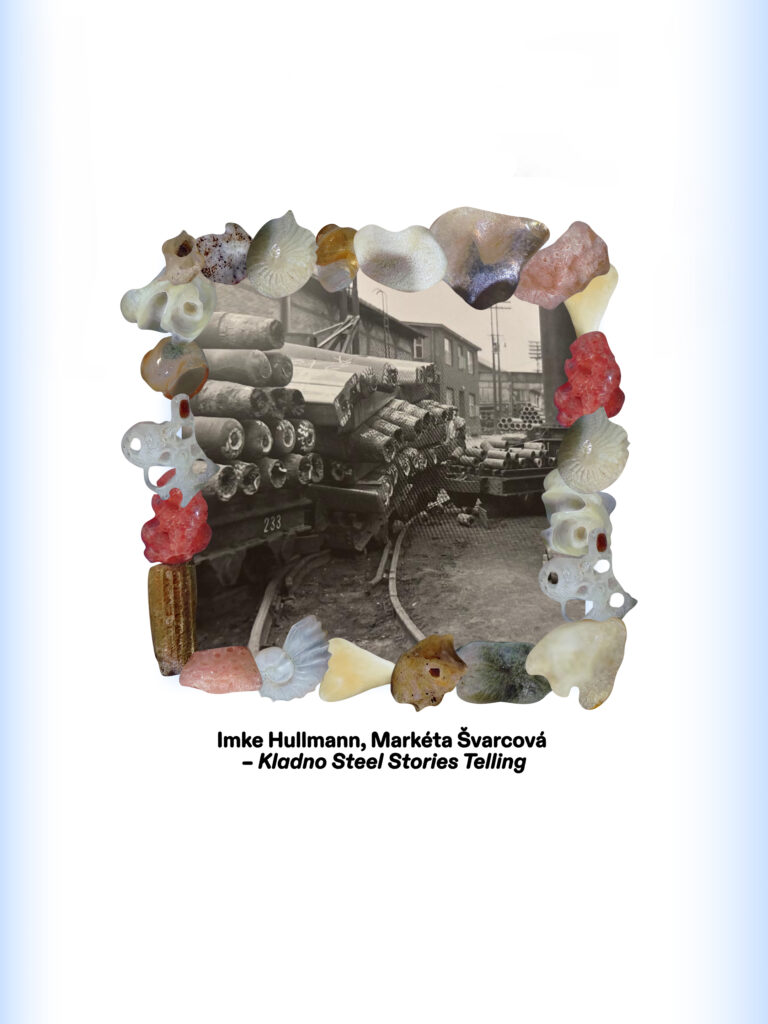
Kladno Steel Stories Telling – Imke Hullmann, Markéta Švarcová
Kladno Steel Stories Telling is a participatory art-research project that, through fragmented stories of steel, returns voice to those whose labor, everyday lives, and care shaped the identity of the city without becoming part of its dominant narratives. The project connects personal storytelling (“zoom in”) with a manifesto of the right to the city (“zoom out”), working through the tension between fragment and collective voice, between the narrator and the disintegration of linear narrative. Through physical imagination—from the Ingot Tree: dialogical steel seating conceived as bodies carrying memory, videos of hands, and mental maps of visual artefacts, to the participatory display What Would You Like to Say and collectively produced memories—the project transforms industrial heritage into a space of co-presence, feminist (dis)obedience, and urban co-existence. Steel here is not only a material but a medium of contradictory relations: healthy and toxic, polluted and clean, past and “green,” visible and invisible. The project explores what is absent from archives and from the city’s landscape, and through collective action and spatial interventions reimagines Poldi not as a monument to the past, but as a living public space where fragments of many stories come together.
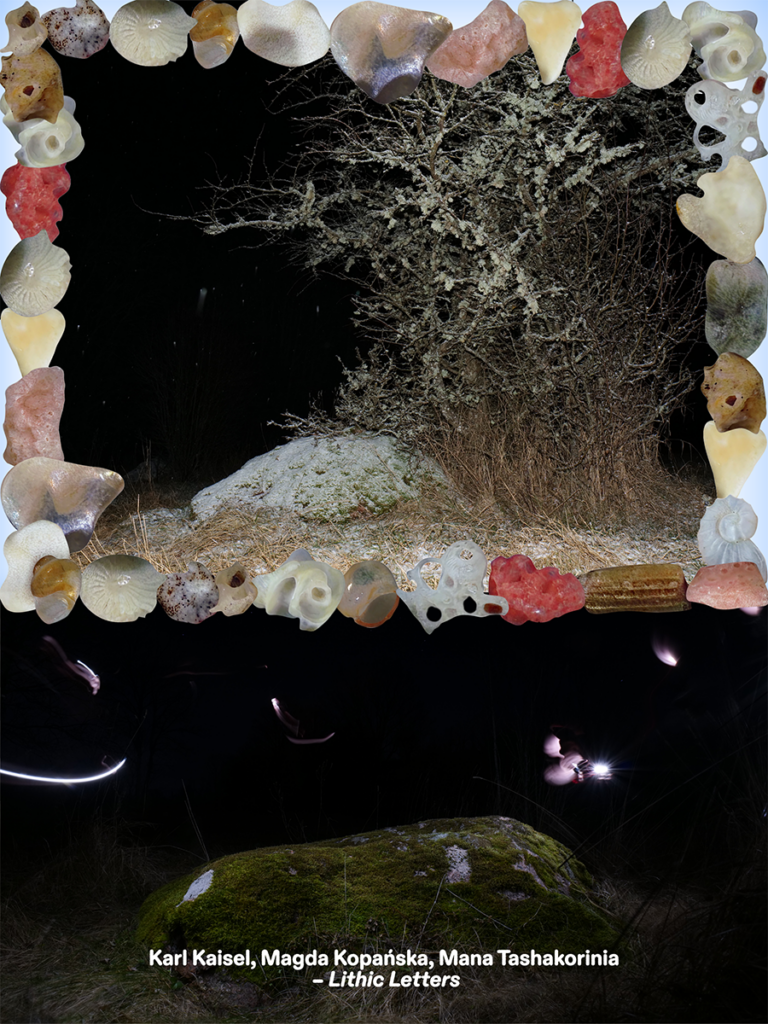
Lithic Letters – Karl Kaisel, Magda Kopańska, Mana Tashakorinia
Karl, Magda, and Mana are working on the story of the Jaanikivi stone and river in Miikse; what once was a pilgrimage site was shattered and dried as part of the land improvement projects in the late 20th century. Their work focuses on how micro stories could function as storytelling tools, helping to understand their macro counterparts on a global scale.

 up
up
 back
back